
Does PRP work for hair loss? What the research says, how many sessions, and who it suits
Written by Dr. Bank · 7 min read · Updated 29 November 2026
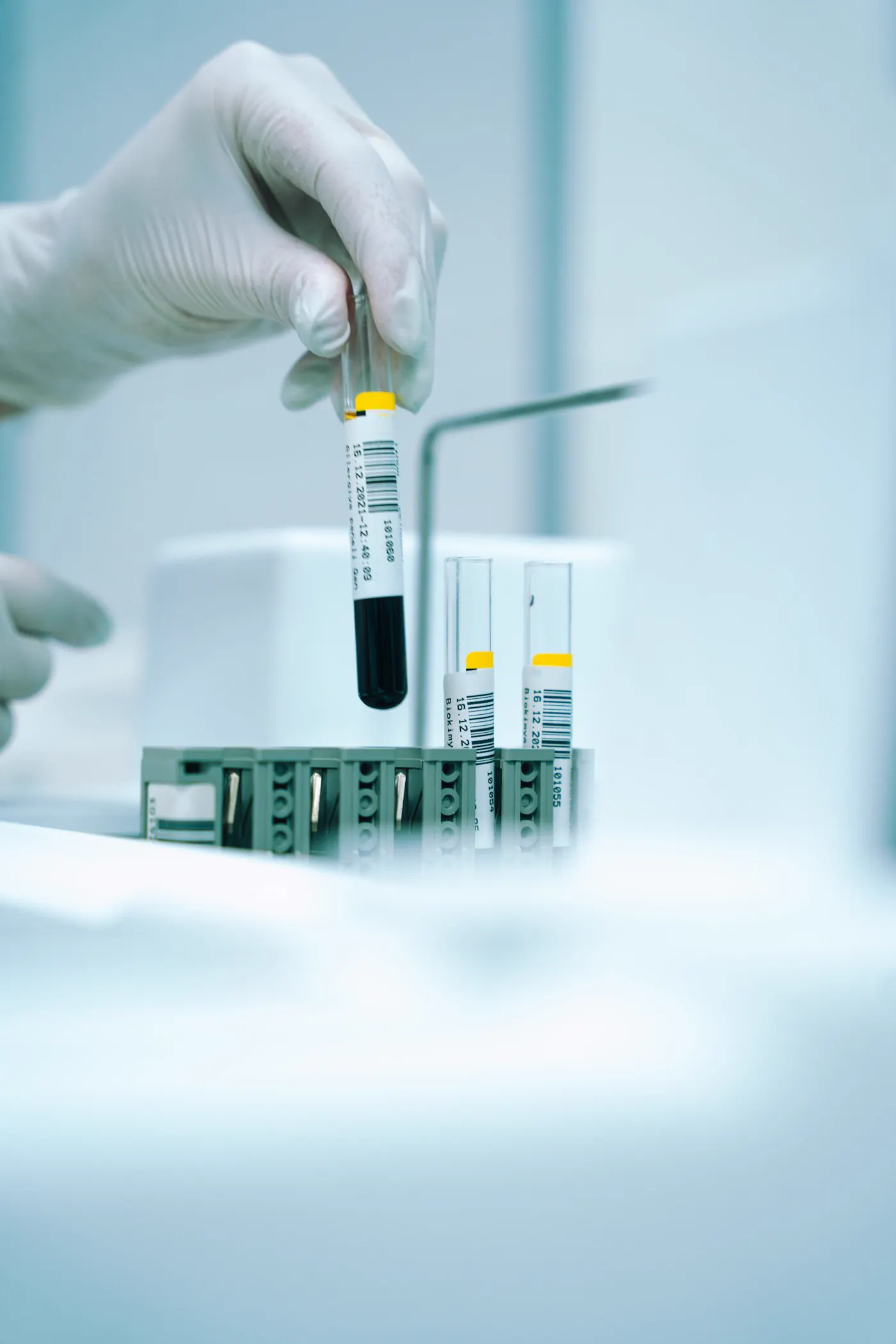
In short: PRP (platelet-rich plasma) concentrates the platelets from your own blood and injects them back into the scalp. Several meta-analyses (studies that pool the results of many trials) found that PRP increases hair density in genetic hair thinning by about 25–30 hairs per square centimetre compared with placebo. The quality of the evidence is still low to moderate, and results vary from person to person. It works best when started early in thinning and combined with the medication your doctor recommends. At Craft Clinic in Bangkok it costs 5,990 THB per session, usually 3–4 sessions about 4 weeks apart.
What PRP is and how it works
The doctor draws a small amount of blood and spins it to separate plasma rich in platelets. Platelets carry several growth factors. Injected into the scalp, they are thought to stimulate the cells around the hair follicle, improve blood supply and lengthen the growing phase of the hair (anagen). The exact mechanism is still not fully understood.[1]
What the research says
| Study | Design | Finding |
|---|---|---|
| Gentile 2015[2] | Randomized half-head trial vs placebo, 3 sessions 30 days apart | More regrowth on the PRP side than the placebo side |
| Alves 2016[3] | Double-blind randomized half-head trial, 25 people, 3 sessions 1 month apart | Hair density improved at 6 months; the authors suggest it as an add-on treatment |
| Shapiro 2020[4] | Randomized split-scalp trial, 35 people, PRP vs saline | About 20 more hairs/cm² on the PRP side, but the saline side also gained about 16, so the difference wasn't significant |
| Dervishi 2020[5] | Systematic review of 13 randomized trials | Pooling 7 trials, about 30 more hairs/cm², with very mixed results between studies; no serious side effects |
| Zhang 2023[6] | Meta-analysis of 9 randomized trials, 238 people | Higher hair density at 3 and 6 months than placebo, and safe |
| Li 2024[7] | Meta-analysis of 10 randomized trials | About 25 more hairs/cm², but no difference in hair thickness |
| Kieling 2024[8] | Meta-analysis of 13 randomized trials, 431 people | About 27 more hairs/cm², but low-quality evidence |
| Yao 2024[9] | Meta-analysis of 5 trials, PRP + topical minoxidil vs minoxidil alone | Adding PRP gave about 18–22 more hairs/cm² at 3–6 months, with no difference in side effects |
| Zhou 2021[10] | Review of 42 studies on female pattern hair loss | A trend toward improvement, but not statistically significant |
How to read these numbers: people with thinning hair often have around 150 hairs/cm².[4] Gaining 25–30 hairs means roughly 15–20% denser hair in the treated area. Many people can see that change, but it won't restore the hair you had as a teenager.
Worth knowing: studies prepare PRP differently, with different spin methods and concentrations. Most are small, and some, such as Shapiro 2020, found the saline side improved too. There is less evidence in women than in men. Overall, the evidence says PRP is "likely to help", not "guaranteed to work for everyone".
Who it suits
- Gradual genetic thinning in men and women, especially in the early stage
- People already on medication who want to boost the result, or who can't use certain medicines
- Shedding after stress or childbirth, alongside treating the cause
It may not work on areas that have been smooth and bald for a long time, where the follicles have shrunk away. Some hair loss is caused by a medical condition, such as thyroid problems, low iron or a scalp disease, so the doctor takes a history first and may suggest blood tests.
The procedure and pain relief
- The doctor assesses your hair loss pattern and scalp
- A small blood draw, then spinning to concentrate the platelets
- PRP is injected in small points across the thinning area; about 1 hour in total
Most of the discomfort comes from the many small injections. We cool the skin before and during the injections and use a vibration device next to each point, so you feel the needle less.
How many sessions, and when you'll see results
- Most studies injected once a month for 3–6 sessions.[9] At the clinic we usually do 3–4 sessions about 4 weeks apart
- Shedding usually slows first; density improves gradually over 3–6 months
- After the course, the doctor may suggest maintenance sessions, because genetic thinning continues
Can it be combined with medication?
Yes, and it usually works better than PRP alone. The main treatments for genetic hair thinning are still topical minoxidil and certain prescription tablets. Research found that PRP with minoxidil increased density more than minoxidil alone.[9] The doctor chooses medication that suits your sex, age and health.
Side effects and aftercare
- Common: pain during injection, redness, swelling or small pinpoint bleeding, settling in 1–2 days
- The pooled studies found no serious side effects[5][6]
- No hair washing for 12 hours and no sauna for 24 hours
Price
Premium PRP costs 5,990 THB per session, including the doctor's consultation and follow-up, for the scalp or face. Visiting from abroad? See planning PRP around a trip to Bangkok.
FAQ
Does PRP for hair loss really work?
Several meta-analyses found that PRP increases hair density in genetic thinning by about 25–30 hairs/cm² compared with placebo. The evidence quality is still limited and results vary, and it works best when started early and combined with medication.
How many PRP sessions do I need for hair?
Usually 3–4 sessions about 4 weeks apart, with results assessed at 3–6 months. Maintenance sessions may help keep the result.
Does PRP for hair hurt?
You may feel sharp pricks on the scalp. We use cooling and a vibration device to reduce the feeling, and most people find it manageable.
Can women with thinning hair have PRP?
Yes. Many studies included women, though there is less evidence in women than in men. The doctor checks for other causes, such as iron or hormones, and plans PRP alongside suitable medication.
Who should not have PRP?
Tell the doctor first if you have a blood disorder or low platelets, take blood thinners, have a scalp infection or are pregnant. The doctor will assess whether PRP is suitable.
References
- Paichitrojjana A, Paichitrojjana A. Platelet Rich Plasma and Its Use in Hair Regrowth: A Review. Drug Des Devel Ther. 2022;16:635–645. Read
- Gentile P, et al. The Effect of Platelet-Rich Plasma in Hair Regrowth: A Randomized Placebo-Controlled Trial. Stem Cells Transl Med. 2015;4(11):1317–1323. Read
- Alves R, Grimalt R. Randomized Placebo-Controlled, Double-Blind, Half-Head Study to Assess the Efficacy of Platelet-Rich Plasma on the Treatment of Androgenetic Alopecia. Dermatol Surg. 2016;42(4):491–497. PubMed
- Shapiro J, et al. Evaluation of platelet-rich plasma as a treatment for androgenetic alopecia: A randomized controlled trial. J Am Acad Dermatol. 2020;83(5):1298–1303. PubMed
- Dervishi G, et al. Autologous platelet-rich plasma therapy for pattern hair loss: A systematic review. J Cosmet Dermatol. 2020;19(4):827–835. PubMed
- Zhang X, et al. Platelet-Rich Plasma for Androgenetic Alopecia: A Systematic Review and Meta-Analysis of Randomized Controlled Trials. J Cutan Med Surg. 2023;27(5):504–508. PubMed
- Li M, et al. Effectiveness of Platelet-Rich Plasma in the Treatment of Androgenic Alopecia: A Meta-Analysis. Aesthetic Plast Surg. 2024;48(5):977–984. Read
- Kieling L, et al. Is autologous platelet-rich plasma capable of increasing hair density in patients with androgenic alopecia? A systematic review and meta-analysis of randomized clinical trials. An Bras Dermatol. 2024;99(6):847–862. Read
- Yao J, et al. The additive value of platelet-rich plasma to topical Minoxidil in the treatment of androgenetic alopecia: A systematic review and meta-analysis. PLoS One. 2024;19(8):e0308986. Read
- Zhou S, et al. Platelet-Rich Plasma in Female Androgenic Alopecia: A Comprehensive Systematic Review and Meta-Analysis. Front Pharmacol. 2021;12:642980. Read
This article summarizes published research as general information, not personal medical advice. Results depend on the person and the cause of hair loss. Please see a doctor for an assessment before any treatment.